Can AI Replace the Therapeutic Relationship?
As digital technology becomes increasingly woven into the fabric of everyday life, many people are seeking new ways to navigate personal challenges and emotional uncertainty in a rapidly changing world. In this context, it is understandable that Artificial Intelligence (AI), specifically Large Language Models (LLMs), are emerging as tools for guidance and support. There is no doubt that LLMs can be valuable tools for reflection. They can help us organise our thoughts, recognise patterns, ask useful questions and offer different perspectives. Yet therapy offers something fundamentally different. Its healing potential lies not only in conversation, but in the experience of sitting with another human being . . .
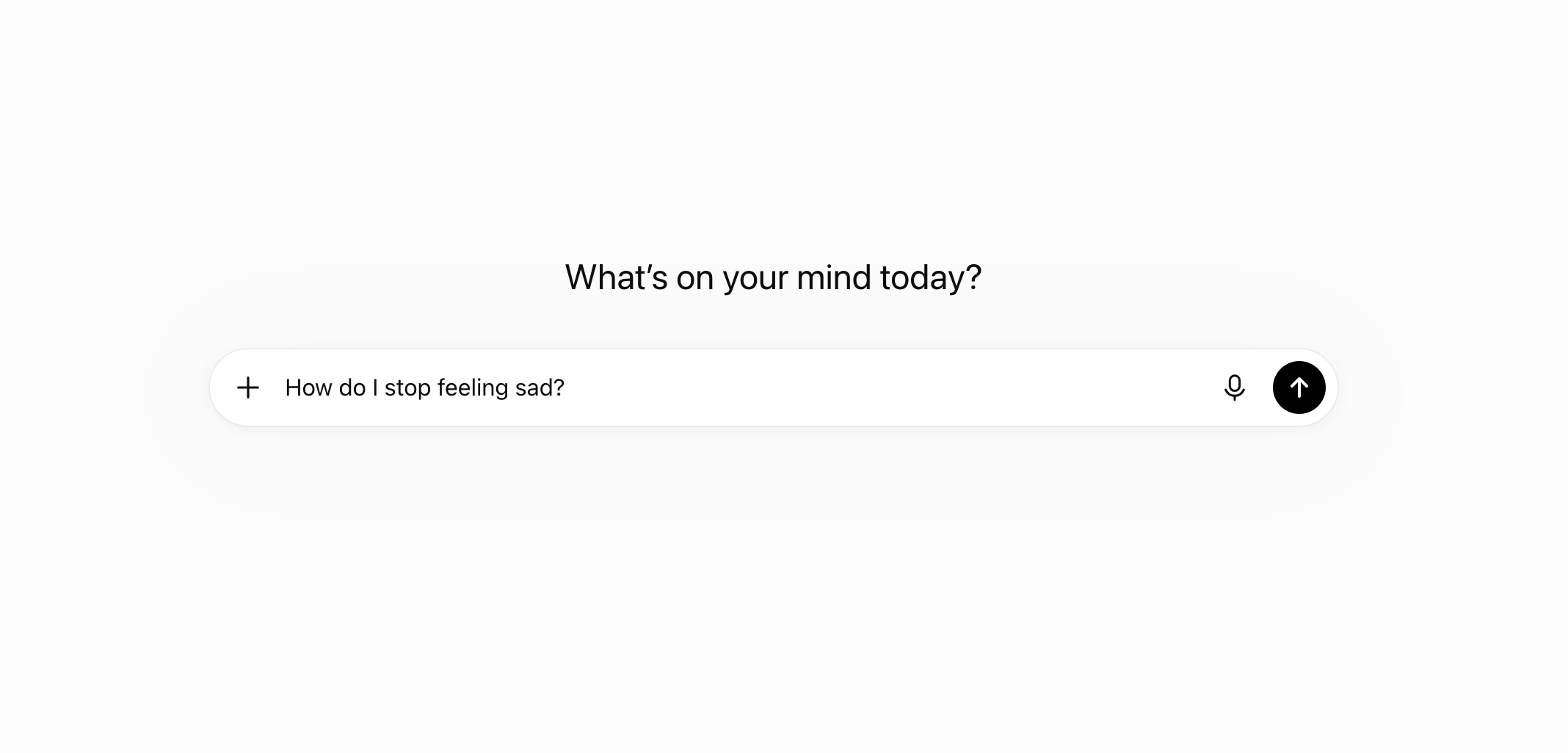
As digital technology becomes increasingly woven into the fabric of everyday life, many people are seeking new ways to navigate personal challenges and emotional uncertainty in a rapidly changing world. In this context, it is understandable that Artificial Intelligence (AI), specifically Large Language Models (LLMs), are emerging as tools for guidance and support. For someone lying awake at 2 a.m., overwhelmed by anxiety or trying to make sense of difficult feelings, receiving an immediate response can bring comfort and relief. LLMs such as ChatGPT are affordable and available at any hour, making them an appealing source of support, particularly when low-cost therapy can be difficult to access. This may lead some people to wonder whether AI can replace the therapeutic relationship.
There is no doubt that LLMs can be valuable tools for reflection. They can help us organise our thoughts, recognise patterns, ask useful questions and offer different perspectives. Yet therapy offers something fundamentally different. Its healing potential lies not only in conversation, but in the experience of sitting with another human being. While words are an important part of the therapeutic process, lasting change may not come through finding the perfect explanation or receiving the right advice. Although we may long for immediate relief, deeper psychological change often comes through allowing ourselves to experience emotions that we have spent years avoiding, within a relationship where we feel safe enough to face them.
Julia Samuel (2017) writes that many people come to therapy hoping to stop the pain. She argues emotional pain is not the obstacle to healing but the cure. Grief cannot be bypassed or solved; it has to be lived through. The same is often true of many emotional struggles. We naturally try to protect ourselves by numbing or distracting ourselves. Sometimes these strategies are necessary, particularly when we are coping with trauma. Yet without taking the time to acknowledge our pain and become curious about where it came from, some solutions can be like putting a plaster on a deep wound. Over time, avoiding or minimising our pain can become its own source of suffering. This where the therapeutic relationship becomes important. Meaningful psychological change occurs when we are met with empathy, authenticity and acceptance (Rogers, 1957). These are the conditions to allow difficult emotions to be felt, understood and integrated at a suitable pace.
Perhaps one of the most powerful moments in therapy is saying something you have never said out loud before. Many of us hide certain thoughts, feelings, or experiences because we fear they will be be met with judgement, rejection, or shame. Attachment and Object Relations theories suggest these fears often have their roots in our earliest relationships. When those experiences are shared with a therapist and instead met with curiosity, compassion, and acceptance, something begins to shift. Healing comes not only from finally speaking what has been held inside, but from having it received differently than we expected or may have experienced before. If so much of our emotional wounding happens in relationship, then healing can happen through relationship too. Experiencing a new kind of relationship can gradually reshape how we see ourselves and others, giving us greater freedom to live more authentically beyond the therapy room.
This relational aspect of therapy is also deeply embodied. We communicate not only through words but through facial expression, tone of voice, posture, breathing and countless subtle signals that occur beyond our conscious awareness. Much of therapeutic change happens through this "right-brain-to-right-brain" communication, where emotions are conveyed and understood without being explicitly spoken (Schore, 1994). There are moments when another person's pain leaves us without words. In these moments, we may not need a verbal response, but simply to feel another human being remaining emotionally present.
Polyvagal Theory (Porges, 2011) suggests that when we experience another person as safe, calm and attuned, our nervous system begins to settle through a process known as co-regulation. Feeling understood is therefore not only a psychological experience but a physiological one. This is something LLMs, however sophisticated their language, cannot replicate. They can respond to our words, but they cannot participate in the embodied, non-verbal experience of human connection.
One potential advantage AI has over therapy is its availability. A therapist may see you once a week, while an LLM can respond instantly at any hour. Yet the boundaries of therapy are not simply practical limitations; they are part of the therapeutic process. Meeting at a regular time each week creates a safe and reliable container in which to explore our struggles at a pace we can manage. The space between sessions also has value. It allows us to reflect on what has emerged, develop a greater capacity to tolerate uncertainty and stay with difficult emotions without seeking immediate reassurance. Over time, we begin to discover our own ability to navigate life's challenges and notice how the work of therapy is gradually taking shape in our everyday lives.
I do not believe AI can replace the therapeutic relationship because therapy offers something that extends beyond language. It is an embodied, relational experience in which healing emerges through emotional presence and connection. This gives us the courage to feel what has previously been too painful to face alone. This does not diminish the value of AI. For some people, it may provide an important stepping stone towards therapy, helping them put words to experiences they have never expressed before. For others, it can be a useful companion between sessions, supporting reflection and helping to organise thoughts that could be explored more deeply with a therapist. AI may compliment therapeutic work but human connection remains at the heart of it.
References
Porges, S.W. (1995). Orienting in a Defensive World: Mammalian Modifications of our Evolutionary Heritage. A Polyvagal Theory. Psychophysiology, 32, 301-318. https://doi.org/10.1111/j.1469-8986.1995.tb01213.x
Rogers, C. R. (1957). The necessary and sufficient conditions of therapeutic personality change. Journal of Consulting Psychology, 21(2), 95–103
Samuel, J. (2017). Grief Works: stories of life, death and surviving. London: Penguin Life.
Schore, A. N. (1994). Affect Regulation and the Origin of the Self: The Neurobiology of Emotional Development. Hove: Lawrence Erlbaum Associates.